


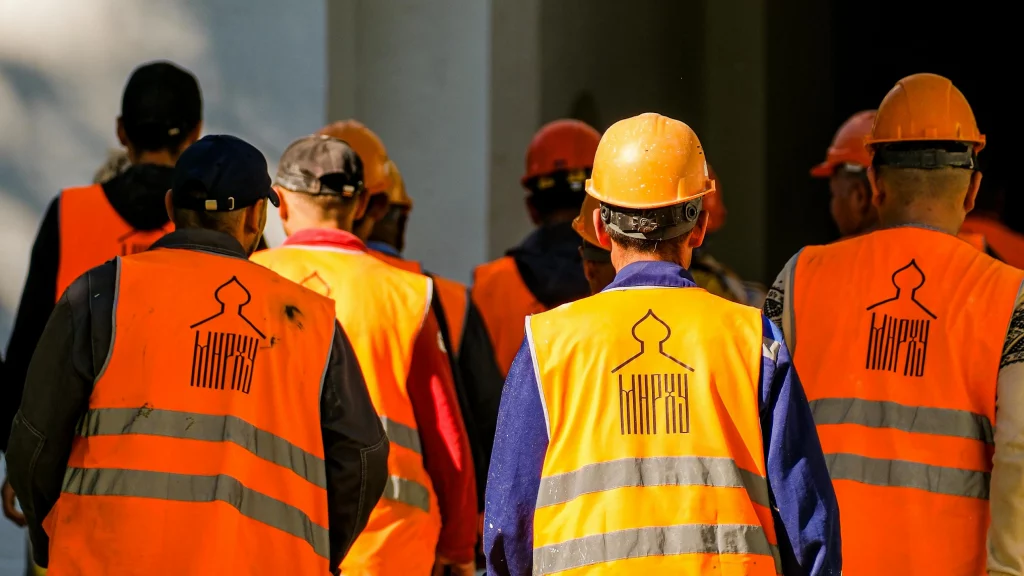

Department of Labour, United States: Improving Respect for Workers’ Rights in Bangladesh
A microcredit-based housing loan programme enabling poor rural families to build and own permanent, cyclone-resilient homes. Loans are structured for low- and irregular-income borrowers and can cover core dwelling units plus essential WASH facilities. The model couples affordable finance with simple guidance on safe siting and resilient construction so homes withstand cyclones, storm surges and seasonal flooding.
Five-Axis Transformation
Data: Household need and repayment assessments inform loan size, tenor and instalment schedules; simple risk checks guide siting and structural choices in hazard-prone areas.
Capacity Building / Technical Assistance: Practical advice for borrowers, local masons and builders on resilient features and upkeep; community demonstrations promote safer construction norms.
Technology / Machinery: Cost-effective, cyclone-resistant features (raised plinths, wind ties, improved foundations, secure roofing) and basic WASH improvements.
Finance: Small loans with affordable instalments, group-based lending and flexible repayment to manage income shocks; progressive upgrading as capacity grows.
Policy: Aligns with national disaster-risk reduction and rural housing priorities by expanding access to safe, durable shelter for low-income households.
Strategic Impact & Value Proposition
Safer, Permanent Shelter that protects lives and assets during extreme weather.
Health & Dignity Gains via improved sanitation and safer water.
Women’s Economic Agency through group lending and asset ownership.
Resilience & Livelihood Protection by safeguarding tools, livestock and stored goods.
Scalable Model replicable across climate-vulnerable districts.
Improving Respect for Workers’ Rights in Bangladesh
Organisation: U.S. Department of Labor – Bureau of International Labor Affairs (ILAB) (with implementing partners)
Location: Bangladesh
Sector: Construction, Garment, Shrimp Farming/Seafood Processing, Tea
Project Type: Labour Rights & OSH Programme—capacity building, union support, policy engagement
Status: Ongoing
Project Overview
A multi-sector initiative to improve working conditions with a focus on gender-based violence and harassment (GBVH), occupational safety and health (OSH), and environmental degradation and climate impacts. The programme strengthens worker organisations to train, represent and advocate for workers; and deepens engagement between workers, government authorities and employers to address grievances, including those related to OSH and GBVH.
Five-Axis Transformation
Data: Mapping sector-specific risks (GBVH, OSH hazards, climate and environmental risks), documenting case outcomes and compliance gaps to inform targeted interventions.
Capacity Building / Technical Assistance: Training for unions and worker leaders on organising, grievance handling, collective bargaining, GBVH prevention, OSH fundamentals, and climate-aware workplace practices.
Technology / Machinery: Practical OSH toolkits (hazard mapping, incident logging, low-cost engineering controls); support for safe equipment use and employer adoption of safer processes.
Finance: Facilitation of access to legal aid and support funds linked to casework and remediation; guidance for enterprises on responsible purchasing and budgeting for OSH and GBVH prevention.
Policy: Engagement with ministries, inspectorates and employer bodies to strengthen enforcement, improve complaint mechanisms, and align with international labour standards; promotion of climate- and environment-sensitive workplace policies.
Strategic Impact & Value Proposition
Safer, More Equitable Workplaces with reduced accidents and GBVH incidence.
Empowered Workers & Stronger Social Dialogue enabling effective dispute resolution and sustained compliance.
Rule-of-Law Gains through better grievance handling and access to remedy.
Resilient, Responsible Supply Chains aligning buyer expectations with improved ES&G performance.
Scalable Reforms via institutional strengthening and sector-wide uptake of good practices.